HOMEOWNERS: $3,000 job minimum to receive a quote or sample.

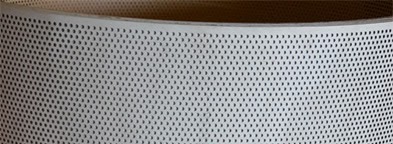
Perforated metal is a versatile material used in both interior and exterior applications. Manufactured with precisely spaced openings, perforated metal creates an open, screen-like surface that allows varying amounts of air, light, and sound to pass through while maintaining the strength and appearance of the metal.
Metal roofing is becoming more popular each year due to it's longevity, durability, long term savings, and the unmatched aesthetic they provide. Each type of metal roofing has it's own set of pros and cons. As you explore these panel profiles we have articles and videos that will make choosing the correct metal roofing panel for your house or commercial building much simpler.
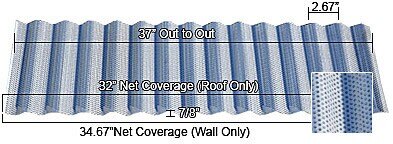
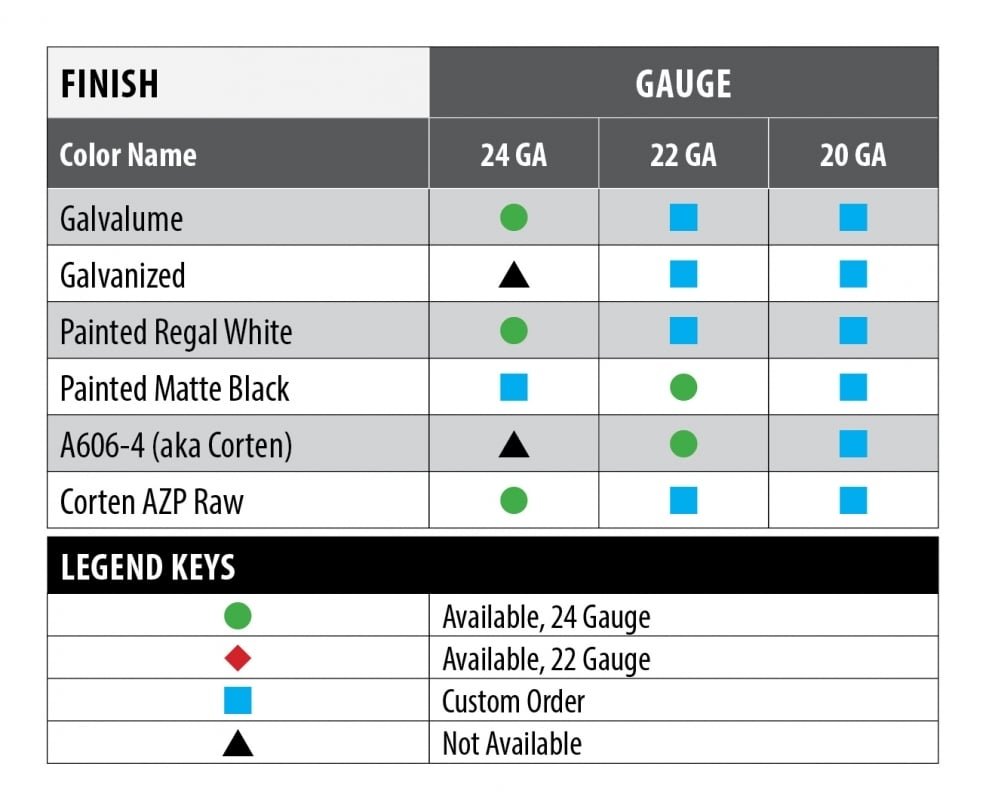
Perforated 7/8" Corrugated metal panels are available in stock and can be custom-manufactured to virtually any length to accommodate your project requirements. Available material options include 20-gauge and 24-gauge Galvalume®, 24-gauge Painted Polar White, and 22-gauge A606-4 (Corten) steel.
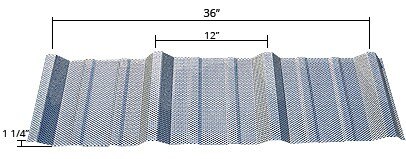
Perforated R-Panel metal panels are available in stock and can be custom-manufactured to virtually any length to meet your project requirements. Choose from 24-gauge Galvalume®, 24-gauge Painted Polar White, or 22-gauge A606-4 (Corten) steel.
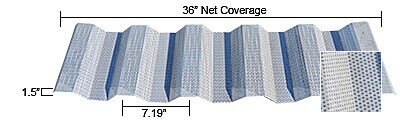
Perforated Western Rib is in stock and can be made at any length. 20 Gauge and 24 Gauge Galvalume®, 24 Gauge Painted Polar White, 22 Gauge A606-4 (Aka Corten) .127 Round Holes With 7/32" Stagger and a 30.5% Open Area. Custom finishes, gauges, and perforation patterns are available.
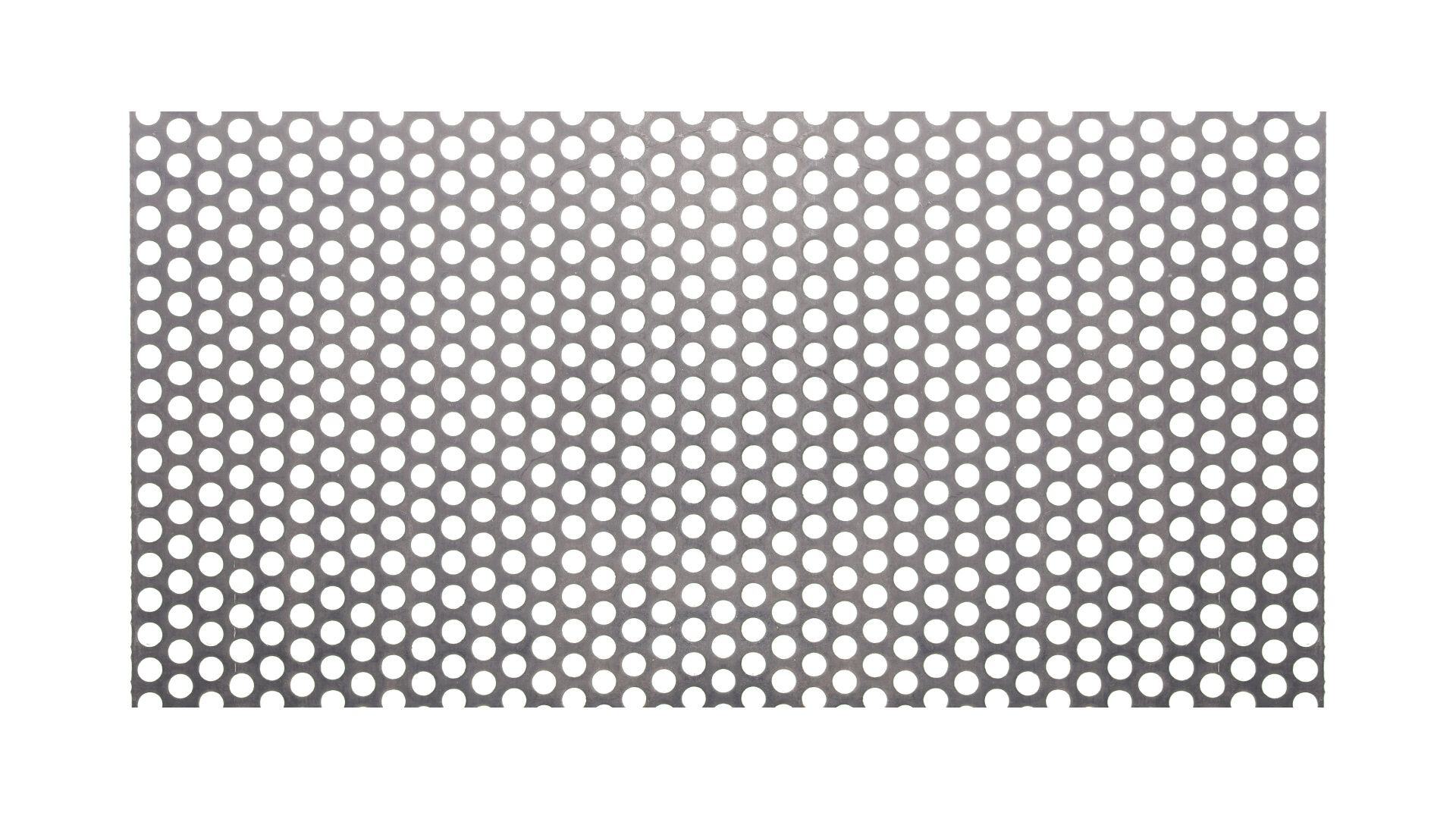
Perforated flat metal sheets are available in stock in 46-inch widths and can be custom-manufactured to virtually any length to meet your project requirements. Standard material options include 20-gauge and 24-gauge Galvalume®, 24-gauge Painted Polar White, and 22-gauge A606-4 (Corten) steel.
Perforated metal coil is available in stock in 46-inch widths, making it a versatile option for custom fabrication, architectural applications, and metal panel production. Standard material options include 20-gauge and 24-gauge Galvalume® and 22-gauge A606-4 (Corten) steel.
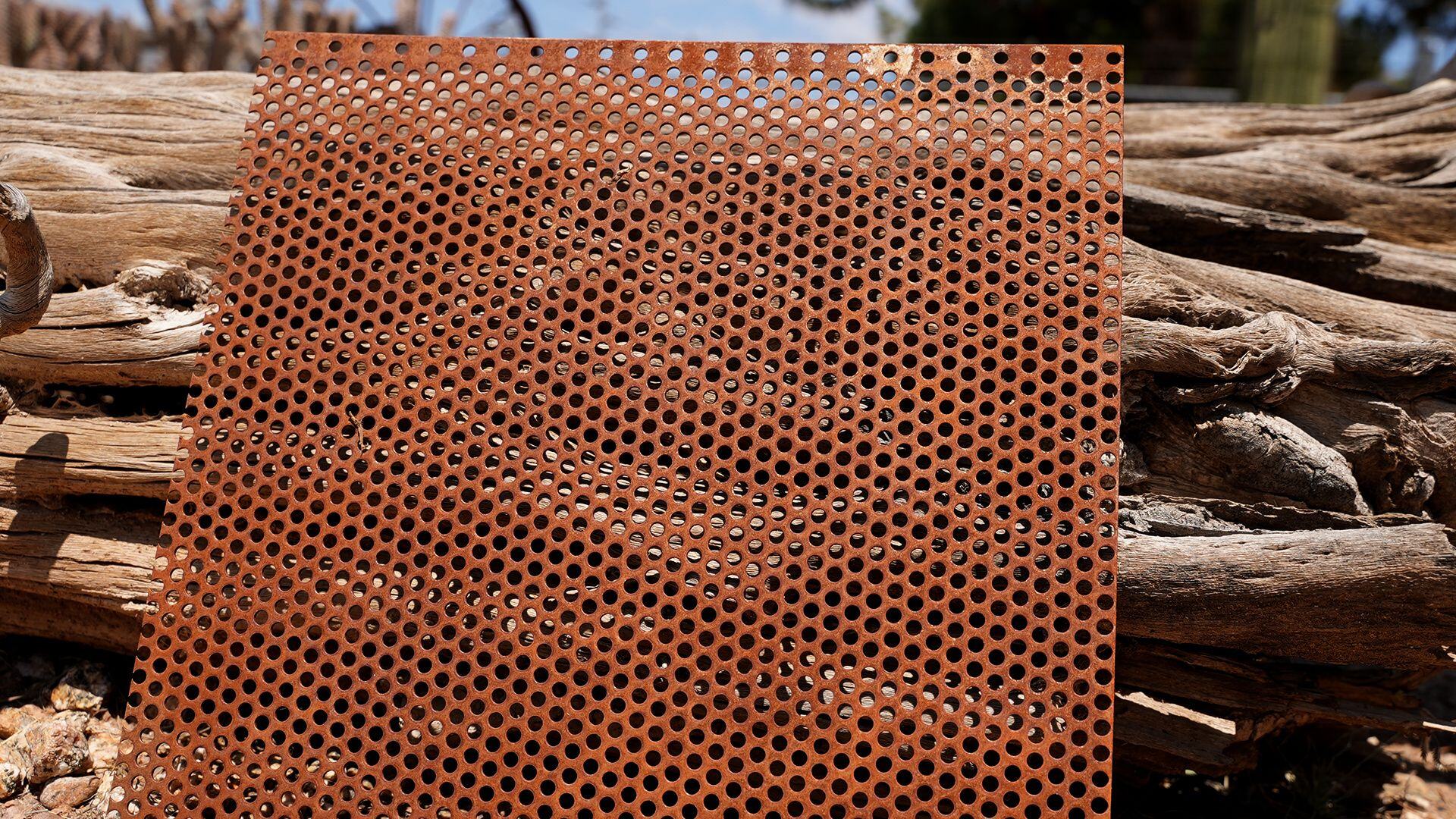
Perforated A606-4 (Corten) weathering steel is available in multiple product formats, including flat sheets, metal coil, and corrugated or architectural metal roofing and siding panels. This versatile material offers a distinctive weathered appearance, making it a popular choice for architectural, commercial, and industrial applications.
If you have questions about metal roofing then we have the answers. Check out the Metal Roofing Learning Center or these FAQ's
Perforated metal is manufactured from several types of metal, depending on the application and performance requirements. Common materials includes:
Open area refers to the percentage of a perforated metal sheet's total surface area that consists of openings. It determines how much air, light, or liquid can pass through the material.
For example, a perforated metal sheet with 40% open area has openings that account for 40% of its total surface area, leaving 60% solid metal. Open area is influenced by hole size, spacing, and pattern arrangement.
Yes. Perforated metal can provide excellent strength and durability, but its structural performance depends on the base metal, thickness, hole size, spacing, and open-area percentage. Larger holes and higher open-area percentages generally reduce the amount of solid material remaining in the sheet. For load-bearing or structural applications, the specific perforated configuration should be evaluated to ensure it meets project requirements.
Rust resistance depends on the type of metal and its protective finish. Aluminum and stainless steel offer corrosion resistance, while carbon steel may require galvanizing, painting, or another protective coating to prevent corrosion. The appropriate material should be selected based on the installation environment, moisture exposure, and expected service life.
Perforated metal is available in a variety of thicknesses, commonly specified by gauge or decimal thickness. The available thickness depends on the metal type, hole pattern, and manufacturing capabilities. Thicker sheets generally provide greater rigidity, while thinner sheets are often easier to handle and fabricate.